
Free U.S. shipping on every order · Setup help included · Toll free 1-866-294-8289 · sales@b2btelecommunications.com

My account · Support

Category: SIP Trunking

How SIP trunks, channels, numbers and billing work for business phone systems.

  • Free Phone Features and Low Cost Toll-Free Numbers: A Startup’s Guide to Choosing a SIP VoIP Service Provider

    Free Phone Features and Low Cost Toll-Free Numbers: A Startup’s Guide to Choosing a SIP VoIP Service Provider

    Toll-free numbers used to signal a big company with a big phone bill. Today a startup can add a toll-free line for a few dollars a month. And many features that once cost extra come free with a modern phone system. Here’s how to get the most from your budget.

    Toll-Free Business Number
    Shop: Toll-Free Business Number

    Phone features that cost nothing extra

    With an owned PBX such as FreePBX or PBXact, these features are built in, with no per-feature fees:

    • Auto attendant and business-hours routing
    • Voicemail-to-email and call recording
    • Ring groups, call queues and hold music
    • Internal calls between extensions and offices
    • Unlimited inbound calls on your SIP channels
    Local Business Phone Number (DID)
    Shop: Local Business Phone Number (DID)

    What low cost toll-free service really costs

    A toll-free number from B2B Telecommunications is $4 a month, plus inbound usage of $0.039 a minute. A business receiving 300 minutes of toll-free calls a month pays about $15.70 in total. You can choose a prefix (800, 833, 844, 855, 866, 877 or 888). Already have a toll-free number? Port it over for a one-time $15.
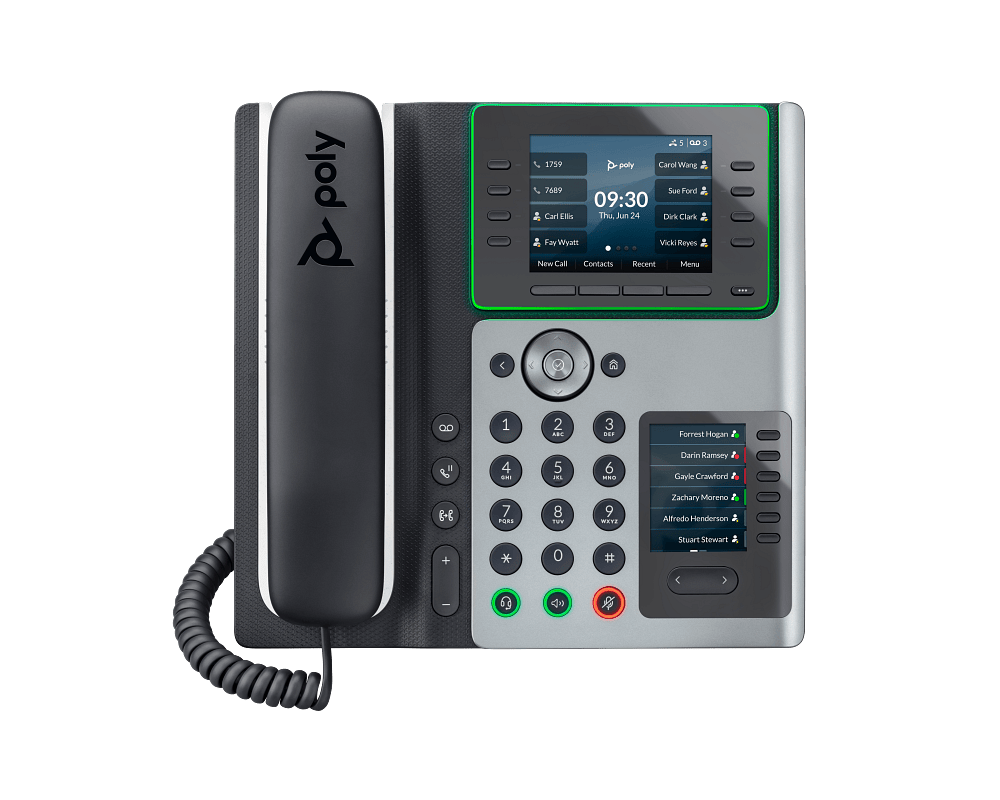
    Poly Edge E450 IP Phone
    Shop: Poly Edge E450 IP Phone

    Local numbers in the right area code

    Customers are more likely to answer, and call back, a number with a familiar area code. Local numbers are $2 a month in any of 370 US area codes. Our bundle pages let you type the exact area code you want, so a New York agency can get a 212 number and a Dallas office a 214.

    How to choose a SIP VoIP service provider

    • Published pricing: you should see the channel, number and per-minute rates before you talk to sales.
    • No long contracts: month-to-month lets you scale channels up or down.
    • E911 compliance: dispatchable-location support for Kari’s Law and RAY BAUM’S Act.
    • Worldwide reach: unlimited US and Canada calling, with international calling available when you need it.
    • Compatibility: works with FreePBX, PBXact, Asterisk, 3CX and other SIP systems.

    Ready to set up your lines? See our worldwide SIP services, or jump straight to the pay-as-you-go bundle, the lowest-cost way to start.
  • SIP Trunking Explained: Pay-As-You-Go vs. Unlimited vs. Channel Bundles

    SIP Trunking Explained: Pay-As-You-Go vs. Unlimited vs. Channel Bundles

    If you already have a PBX — Sangoma, FreePBX, or otherwise — SIP trunking is what connects it to the outside phone network. It replaces old-fashioned analog phone lines with a data connection, and unlike physical phone lines, SIP trunk capacity can flex with how your business actually uses the phone. The catch is that there isn’t one right pricing model, and choosing the wrong one means either overpaying every month or hitting a wall the first time call volume spikes.

    International Calling Credit – $25
    Shop: International Calling Credit – $25

    Pay-As-You-Go

    You pay a small monthly base fee plus a per-minute rate for calls. This makes sense for businesses with genuinely light or unpredictable call volume — a small office where the phone rings a dozen times a day, or a business that’s mostly inbound with occasional outbound calls. The risk is that if call volume grows without you noticing, per-minute costs can quietly climb past what a flat plan would have cost.

    Unlimited Domestic Plans

    A flat monthly rate per channel, regardless of how many minutes you actually use, as long as calls stay domestic. This is the right fit for offices that are on the phone constantly — sales teams doing outbound dialing, support desks, anyone where “how many minutes did we use this month” is a number nobody wants to track. The tradeoff is that a channel sitting mostly idle is money left on the table compared to pay-as-you-go.

    Fax-to-Email Number
    Shop: Fax-to-Email Number

    Enterprise Channel Bundles

    For larger deployments, bundling channels (10, 20, 50+ at once) at a fixed price per bundle usually beats pricing them individually, whether flat-rate or metered. This is where per-channel cost drops the most, but it only makes sense once you have enough concurrent call volume to actually use the bundle — buying a 20-channel bundle to run 4 concurrent calls is worse than either of the other two models.

    How Many Channels Do You Actually Need?

    This is the number that determines cost more than which pricing model you pick. A channel is one call — inbound or outbound — happening at that instant. If your PBX supports 40 extensions but your peak concurrent call count is 8, you need 8-10 channels of headroom, not 40. Undersizing channels means callers get a busy signal during your busiest hour even though most extensions are idle; oversizing means paying for capacity that never gets used.

    FreePBX 1200 Appliance
    Shop: FreePBX 1200 Appliance

    DIDs and Area Codes

    Beyond the trunk itself, you’ll need DID numbers — the actual phone numbers that ring into your system. Local numbers in the area codes your customers expect, toll-free numbers if you serve a national customer base, and enough numbers to support direct-dial extensions if that matters for your business. Porting existing numbers from a legacy carrier is usually possible and worth asking about before you commit to new numbers.

    Don’t Skip E911 Compliance

    Every extension on a SIP trunk needs to resolve to an accurate physical address for emergency services — this isn’t optional, and it’s easy to overlook when a trunk is set up quickly. Per-line E911 registration should be part of any SIP trunking setup from day one, not an afterthought.

    Getting It Right

    The honest answer for most businesses is a plan that matches actual concurrent usage with a mix of flat-rate and metered channels, no long-term contract locking you into a size that made sense a year ago. Explore our worldwide SIP trunking services and build a bundle, or contact our support team — we’ll ask about your call volume before recommending a plan, not after you’ve already signed up for the wrong one.

We acceptVisaMastercardAmexDiscoverStripePayPalAuthorize.net